

3 Simple Steps to Organize Any Space (Without Getting Overwhelmed)
Whether you live in a small home or a spacious one, most of us have that one area we just can’t seem to figure out.
You know the one:
The den that became the catch-all room.
The play area that looks like a toy store exploded.
The office that’s slowly disappearing under piles of paper.
The storage space you avoid because it feels like a mystery box of chaos.
If you’re nodding along, you’re not alone…and you’re not failing. Real life is busy. Homes get cluttered when systems don’t match the way we actually live. And the more overwhelmed we feel, the harder it becomes to start.
The good news? There is a way to get your home functional again, and it doesn’t have to be complicated.
In fact, I’m going to break it down into three simple steps that work for almost any room, any home, and any lifestyle.
Ready?
Step 1: Choose Your Space
The first step to getting organized is simple… and also the hardest:
You have to start somewhere.
Most people don’t struggle with organizing because they’re incapable. They struggle because they don’t know where to begin. When you look at a whole house that needs work, it can feel like an impossible project. That’s why choosing your starting point matters.
Here are two options, depending on what you need most right now:
1) Start small
If you’re feeling overwhelmed, start with the space that requires the least amount of work.
This might seem counterintuitive…shouldn’t we go straight for the biggest mess? Not necessarily. Starting small gives you a quick win, and that matters more than people realize. Small wins build momentum, confidence, and motivation.
Think of it like proof: “I can do this.”
Some good “starter spaces” include:
a bathroom drawer
your entryway surface
one kitchen cabinet
a single toy bin
your nightstand
It doesn’t have to be dramatic. It just needs to be doable.
2) Start with the high-priority area
Another smart approach is to start with the space that creates the most stress because you use it constantly.
This is usually a high-traffic, high-visibility space like:
the kitchen
the living room
the entryway
the family command center
the kids’ play area
If that high-priority area feels too big to handle all at once, don’t abandon it, break it into smaller zones.
For example:
Pantry first, then counters
Desk area first, then shelves
One toy station, then the rest
You don’t need a full-room makeover in one day. You just need a starting point.
Step 2: Define Your Space (Two Ways)
Once you’ve chosen your space, the next step is to define it. And this is where most organizing attempts go wrong.
People often jump straight to buying bins, labeling everything, and trying to make the room look perfect… without deciding what it’s actually for.
Instead, you’re going to define the space two ways:
First: Define the purpose of the room overall
Before you move a single item, ask yourself a few questions:
Who uses this space?
What activities happen here?
Is the space meant to be formal or casual?
What needs to happen here daily (realistically)?
How do you want to feel when you walk into this room?
That last question is powerful.
Because organizing isn’t only about tidying. It’s about building a home that supports your nervous system and your real life.
Maybe you want to feel:
calm
clear
cozy
motivated
proud
peaceful
supported
That feeling becomes your “north star” when you’re making decisions.
Second: Define the space by function (create stations)
Now that you understand the purpose of the room as a whole, it’s time to define the different zones within it.
Each space needs smaller sections that serve specific purposes. These are often called stations, and you may already be using them without realizing it.
A station is simply an area in a room that supports one activity.
Examples include:
a reading nook
a toy corner
a homework station
a coffee station
a craft zone
a cooking prep area
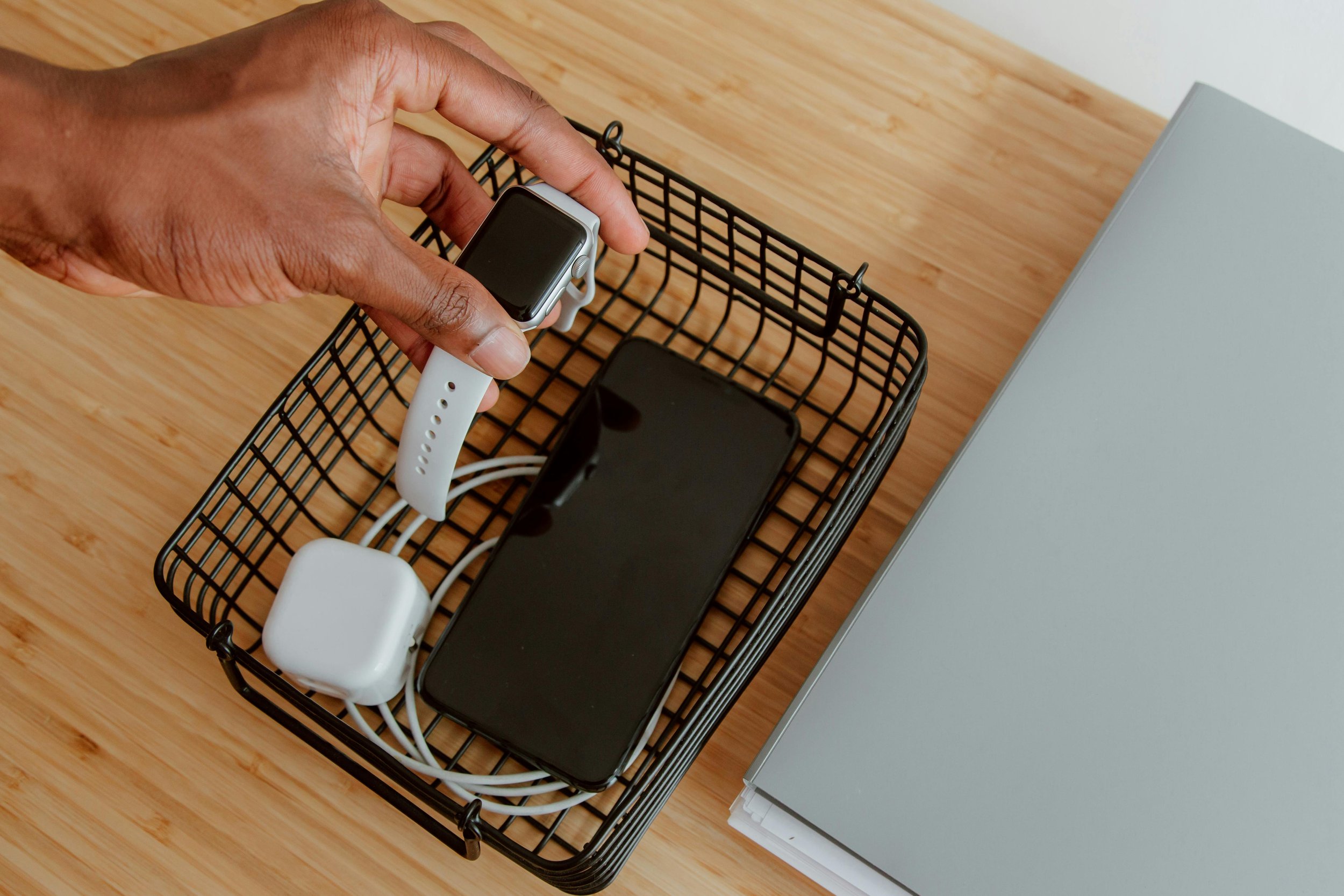
a drop zone for keys and bags
When you create stations, you give the room structure. Instead of being a space that “holds stuff,” it becomes a space that supports routines.
And when a room supports routines, it becomes easier to maintain.
This is the secret to long-term organization.
It’s not about perfection. It’s about matching your space to your life.
Step 3: Refine Your Space
Now we get to the part that most people think is organizing: sorting, decluttering, putting things away.
But here’s the difference:
Because you’ve already defined the purpose of the room and created stations, this step becomes much easier.
Now you can refine the space with intention.
Give everything a home
Once each zone has a purpose, you can begin placing items where they naturally belong.
Ask yourself:
Where would I look for this?
Where do I use this most often?
Which station does this support?
Your home should work with your habits, not against them.
Keep what supports your current life
This is also where you decide what stays and what goes.
As you handle items, gently evaluate:
Does this still serve me?
Do I use it in my current life?
Would I notice if it disappeared?
Do I have too many of these?
If the item doesn’t fit the purpose of the room (or the station), it may belong somewhere else, or be ready to donate.
Create a simple system you can maintain
The goal isn’t to create a Pinterest-worthy space that falls apart in three days.
The goal is to create a functional home that feels easier to live in.
That might mean:
open bins instead of complicated containers
fewer categories instead of micro-sorting
labels that make it easier for everyone to help
a “reset basket” for quick cleanups
The best organizing system is the one you can actually maintain.
Your Home Can Feel Good Again
And there you have it, three simple steps to organize any space:
Choose your space
Define your space (two ways)
Refine your space
You don’t have to organize your whole home overnight. You can choose one area, take one step, and build momentum from there.
Your home can feel calm and functional. It’s allowed to support you.
Ready for your next step?
If you’re feeling motivated but still a little unsure where to begin, I created something to help: The Declutter Without Shame Guide. It’s a gentle, simple roadmap for letting go of clutter without guilt, pressure, or perfectionism.
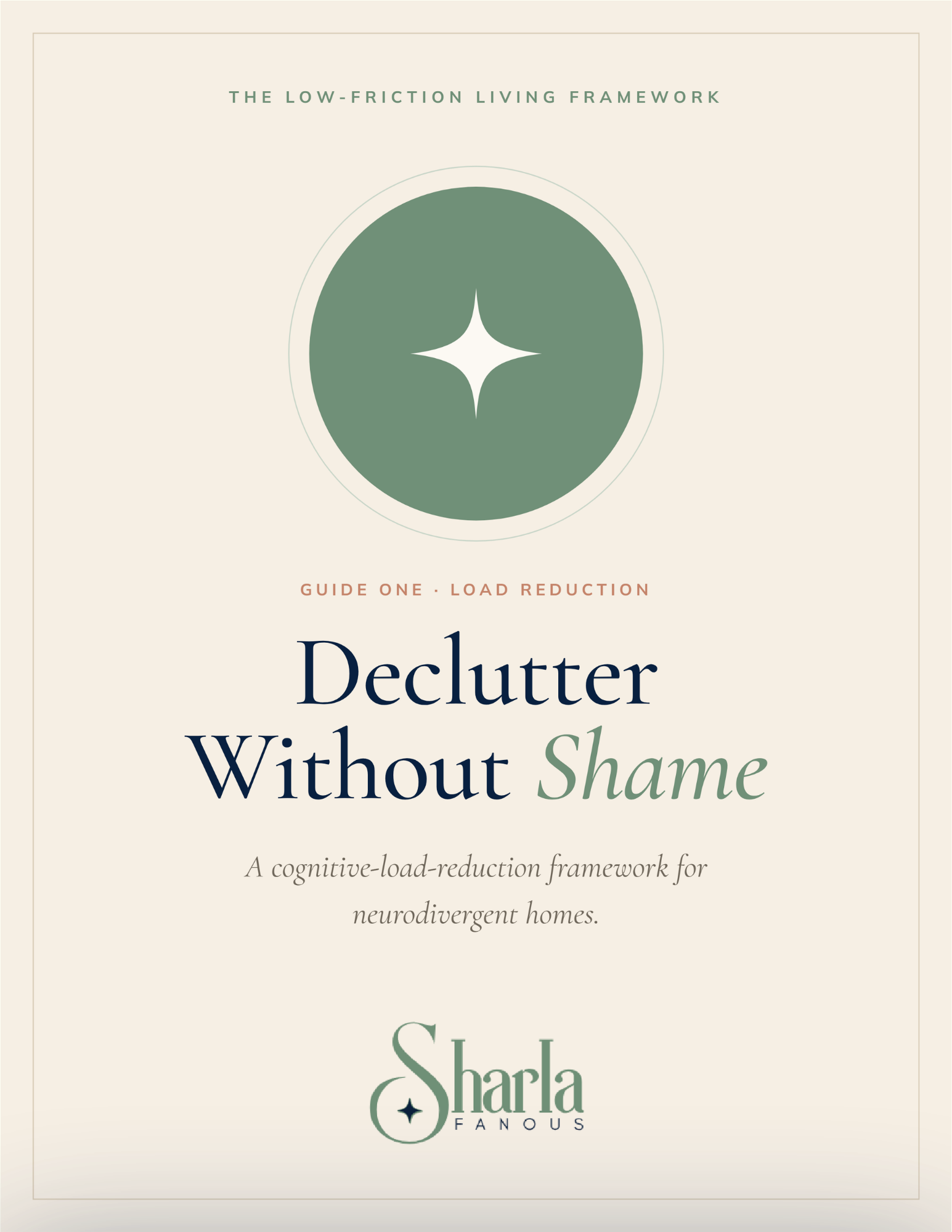
Inside, you’ll learn how to make decisions faster, reduce overwhelm, and create a calm, functional home—one small step at a time.
Download the Declutter Without Shame Guide and start your first reset today.
Warmly,
Sharla