

Effective Organizing Strategies for Neurodivergent Families
If you’re raising — or living in — a neurodivergent household, you already know something important:
Traditional organizing advice doesn’t always work.
Colour-coded Pinterest systems. Minimalist aesthetics. “Just create a routine.”
It sounds good. It looks good.
And then it quietly falls apart.
Not because you failed.
Because the system wasn’t designed for how your brains function.
Neurodivergent families — ADHD, autism, sensory processing differences, anxiety, executive functioning challenges — need organizing systems that reduce friction, not add to it.
Let’s talk about what actually works.
1. Reduce Decision Fatigue First
Executive functioning challenges often show up as overwhelm around small decisions.
Where does this go?
What category does this belong in?
Do I keep this?
When do I deal with it?
Multiply that by 200 micro-decisions a day, and burnout builds fast.
Effective strategy:
Create fewer categories.
Use large, visible labels.
Choose open or clear storage when possible.
Prioritize “good enough” over “perfect.”
The goal is cognitive relief, not aesthetic perfection.
If someone has to think hard about where something belongs, the system is too complicated.
2. Make Systems Visible (Out of Sight = Out of Mind)
Many ADHD brains operate on visual cues. When something disappears into a drawer, it may disappear from memory.
Instead of hiding everything away:
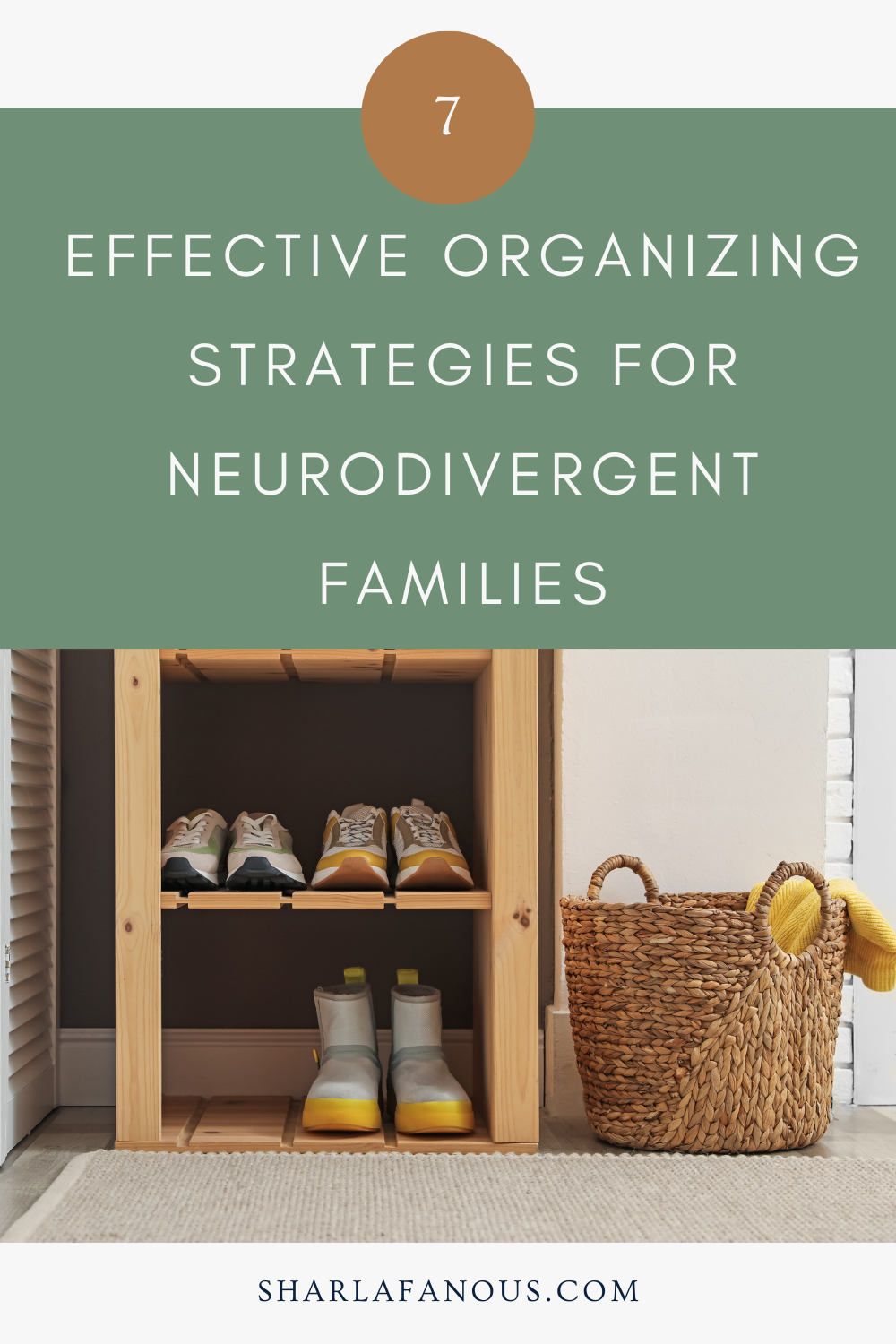
Use open shelving with defined containers.
Install hooks instead of relying solely on closets.
Create a visible family command center.
Store items where they are used, not where they “should” go.
Ask yourself:
Where does friction naturally happen in this room?
That’s where your system needs to live.
3. Design for Sensory Regulation
Clutter is not just visual — it’s neurological.
Too many colours, too many textures, too many competing objects can create sensory overload.
Effective strategies:
Choose neutral or cohesive storage containers.
Reduce visual noise by grouping similar items.
Create a quiet corner or sensory reset space.
Avoid overfilling shelves.
Organizing for neurodivergent families is not about minimalism, rather it’s about regulating the nervous system.
Sometimes that means less stuff. Sometimes it means better containment.

4. Build Low-Friction Routines (Not Rigid Rules)
Rigid systems break quickly in neurodivergent homes.
Instead of strict daily checklists, think in terms of anchors:
Morning reset (5–10 minutes before school/work)
Evening landing zone reset
Weekly 15-minute whole-family tidy
Short. Predictable. Repeatable.
Visual checklists help — especially for children and teens. But keep them simple and age-appropriate.
The goal is momentum, not compliance.
5. Organize Around Real Life — Not Aspirations
This one matters.
If laundry constantly piles up in the hallway, that’s data.
If backpacks land on the kitchen table every day, that’s data.
If toys migrate into the living room nightly, that’s data.
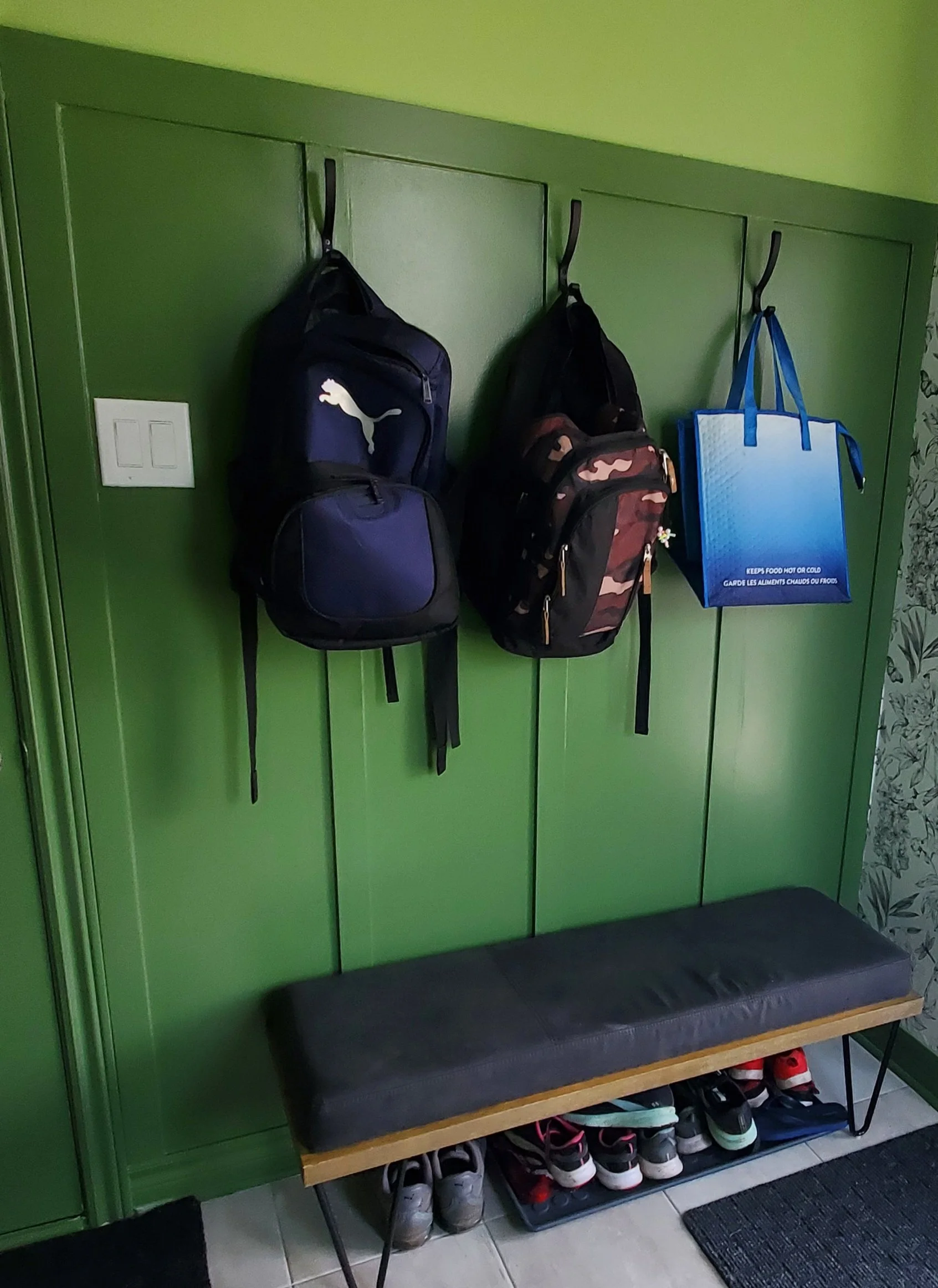
Don’t fight patterns. Design around them.
Add a hamper where clothes are actually dropped.
Install hooks where backpacks land.
Create a living-room toy basket instead of insisting they stay upstairs.
Organizing works best when it supports behaviour — not when it tries to control it.
6. Adapt as Needs Change
Neurodivergent families evolve quickly. Interests intensify. School demands increase. Sensory needs shift.
A good system should:
Be adjustable.
Allow space for special interests.
Grow with your child.
Be easy to reset after disruptions.
Perfection is fragile. Flexible systems are sustainable.
7. Remove Shame from the Process
This might be the most important strategy of all.
Clutter in a neurodivergent household is not a moral failure. It’s often a sign of cognitive overload.
Organizing should feel collaborative and supportive — not corrective.
When families feel safe, systems stick.
When people feel judged, they avoid the process entirely.
Compassion creates sustainability.
The Bigger Picture
An organized home is not about aesthetics.
It’s about:
Lowering executive functioning demands
Reducing sensory overwhelm
Increasing independence
Creating predictability
Protecting nervous systems
Structure creates safety. And safety creates capacity.
When your environment supports your brain instead of fighting it, everything shifts.
If You’re Feeling Overwhelmed…
Start small.
Choose one drawer. One shelf. One corner.
Simplify the categories. Add visible labels. Remove what no longer serves your family.
Momentum builds from small wins.
And if you want a structured, brain-aligned roadmap, my Declutter Without Shame Guide walks you step-by-step through creating sustainable systems without guilt or perfection pressure.
Because your home should support your family — not exhaust it.