

Why Traditional Organizing Advice Fails ADHD & Autism Families
If you’ve ever tried to follow mainstream organizing advice and thought, “Why does this never work in our house?” — you’re not alone.
For many ADHD and autism families, traditional organizing systems don’t fail because you lack motivation, discipline, or consistency. They fail because the systems themselves were never designed for how neurodivergent brains actually function.
Most organizing advice is built around assumptions that simply aren’t true for households navigating executive functioning challenges, sensory needs, or variable energy levels. The result? Systems that look good on paper but collapse in real life.
Let’s talk about why that happens.
1. Traditional Systems Assume Consistent Executive Function
Many organizing methods rely on habits like:
remembering where things go
maintaining routines automatically
completing multi-step processes
noticing clutter before it builds up
For ADHD brains, executive functioning can fluctuate dramatically day to day.
Even highly intelligent and capable people may struggle with:
working memory
task initiation
sustained attention
decision fatigue
A system that requires constant mental effort to maintain will eventually break down. That’s not a personal failure. It’s a design problem. Supportive systems for neurodivergent families reduce the number of decisions required, rather than adding more rules to follow.
2. Hidden Storage Creates Invisible Problems
Traditional organizing often prioritizes visual minimalism.
You’ll see advice like:
hide items in drawers
store things behind cabinet doors
keep surfaces completely clear
While this can create a tidy appearance, it often creates a new challenge: out of sight becomes out of mind.
For ADHD households, hidden storage can lead to:
forgotten supplies
duplicate purchases
unfinished tasks
clutter migrating to visible surfaces
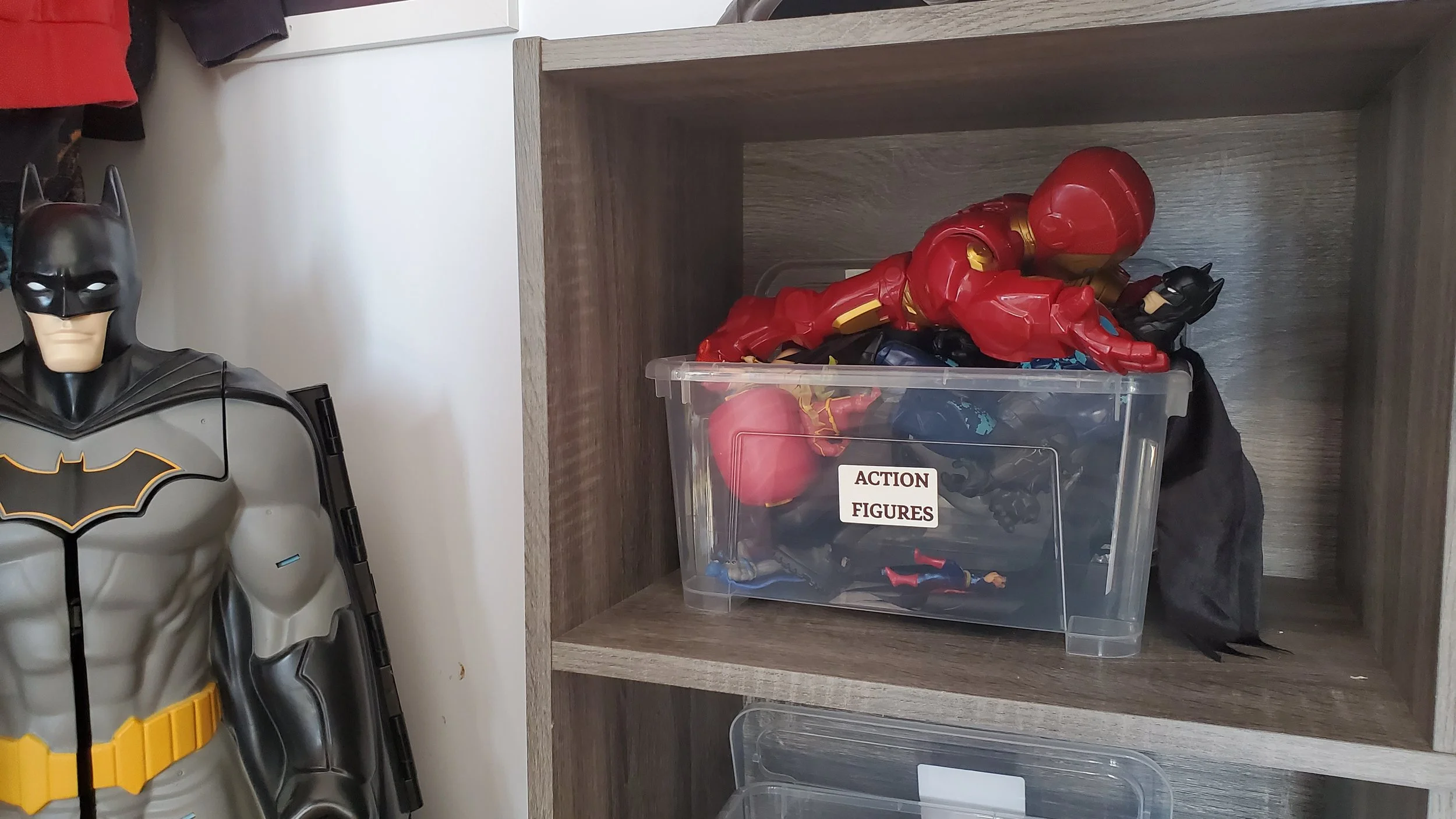
Low-friction organizing often works better when items are:
visible
accessible
clearly categorized
Instead of hiding everything away, the goal becomes making systems easy to use without needing to think about them.
3. One-Size-Fits-All Systems Ignore Sensory Needs
Autistic individuals often experience heightened sensory awareness.
That means environments can quickly become overwhelming if they include:
visual clutter
unpredictable storage locations
noisy or chaotic spaces
inconsistent routines
Traditional organizing rarely considers sensory regulation. But calm, predictable environments can make a profound difference for children and parents alike.
Thoughtful systems create spaces that are:
visually simple
consistent
easy to navigate
supportive of regulation and focus
Organizing isn’t just about storage — it’s about creating an environment that supports the nervous system.
4. Many Systems Require More Energy Than Families Have
Another hidden assumption in mainstream organizing advice is available time and energy.
Parents are often told to:
maintain daily reset routines
constantly purge items
rotate seasonal storage
maintain detailed labeling systems
But families managing ADHD, autism, school demands, therapies, and everyday life are already operating at full capacity. Systems that require constant upkeep quickly become overwhelming. Instead, the goal should be load reduction. Good systems work even on low-energy days. They should be simple enough that anyone in the household can maintain them.
5. The Real Goal Isn’t Perfection — It’s Function
The biggest myth in organizing culture is that a perfectly tidy home equals a successful system. But for neurodivergent families, success looks different.
A successful home system might mean:
backpacks always have a landing spot
homework materials are easy to find
toys can be reset quickly
mornings require fewer decisions
The measure of success isn’t aesthetic perfection. It’s whether the home reduces friction in everyday life.
A Different Approach: Low-Friction Living
Instead of forcing families to adapt to rigid organizing rules, a better approach is to design systems around how people actually live.
In my work with families, I focus on four principles I call the Low-Friction Living Framework:
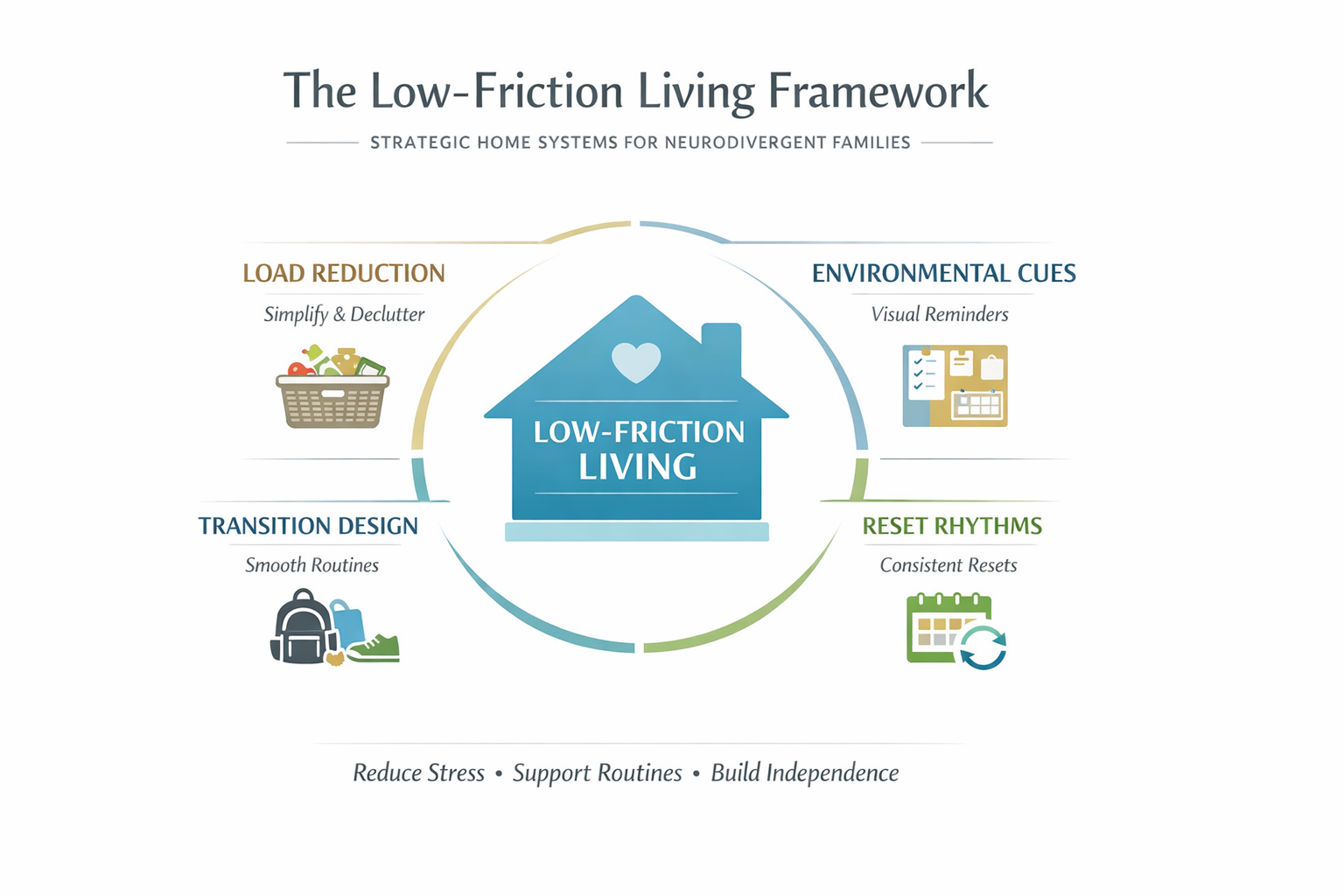
Load Reduction
Reducing the number of decisions and tasks required to maintain the home.
Environmental Cues
Designing spaces that visually guide behaviour and routines.
Transition Design
Supporting common friction points like mornings, school transitions, and homework time.
Reset Rhythms
Creating simple routines that restore order without overwhelming the household.
These systems aren’t about perfection. They’re about creating homes that actively support the people living in them.
You’re Not Failing — The System Is
If organizing advice has never quite worked for your family, there’s a good chance the problem wasn’t you. The advice simply wasn’t built with neurodivergent households in mind. With the right systems in place, homes can become calmer, more predictable, and far easier to manage. And that kind of environment benefits everyone.
Want to start making your home easier to manage?
Check out the digital shop for guides to help you manage your home more easily.
Or learn more about The Collective, where you’ll have access to all of the resources I have to offer when you become a member.