
How to Set Up Home Systems When You’re a Parent with ADHD
If you’re a parent with ADHD trying to create structure at home, you’ve probably experienced this cycle:
You get inspired. You reorganize everything. You create a beautiful system.
Two weeks later… it collapses.
Not because you’re lazy. Not because you lack discipline. But because many organizing systems are built for neurotypical brains.
And ADHD brains need something different.
Let’s talk about what actually works.
1. Stop Building “Perfect.” Start Building “Low Friction.”
The most common mistake? Designing systems that look good but require too many steps.
If a system requires:
Folding precisely
Sorting into multiple subcategories
Opening drawers and lifting lids
Making too many small decisions
…it won’t last.
ADHD-friendly systems prioritize:
Fewer steps
Fewer decisions
Visual clarity
Easy reset
If it takes five steps to maintain, it will eventually stop happening.
Your goal is not aesthetic perfection.
Your goal is sustainability.
2. Make Everything Visible (But Contained)
Out of sight is often out of mind for ADHD brains.
This is where many systems fail. We’re told to hide everything — but then we forget what we own.
Instead, try:
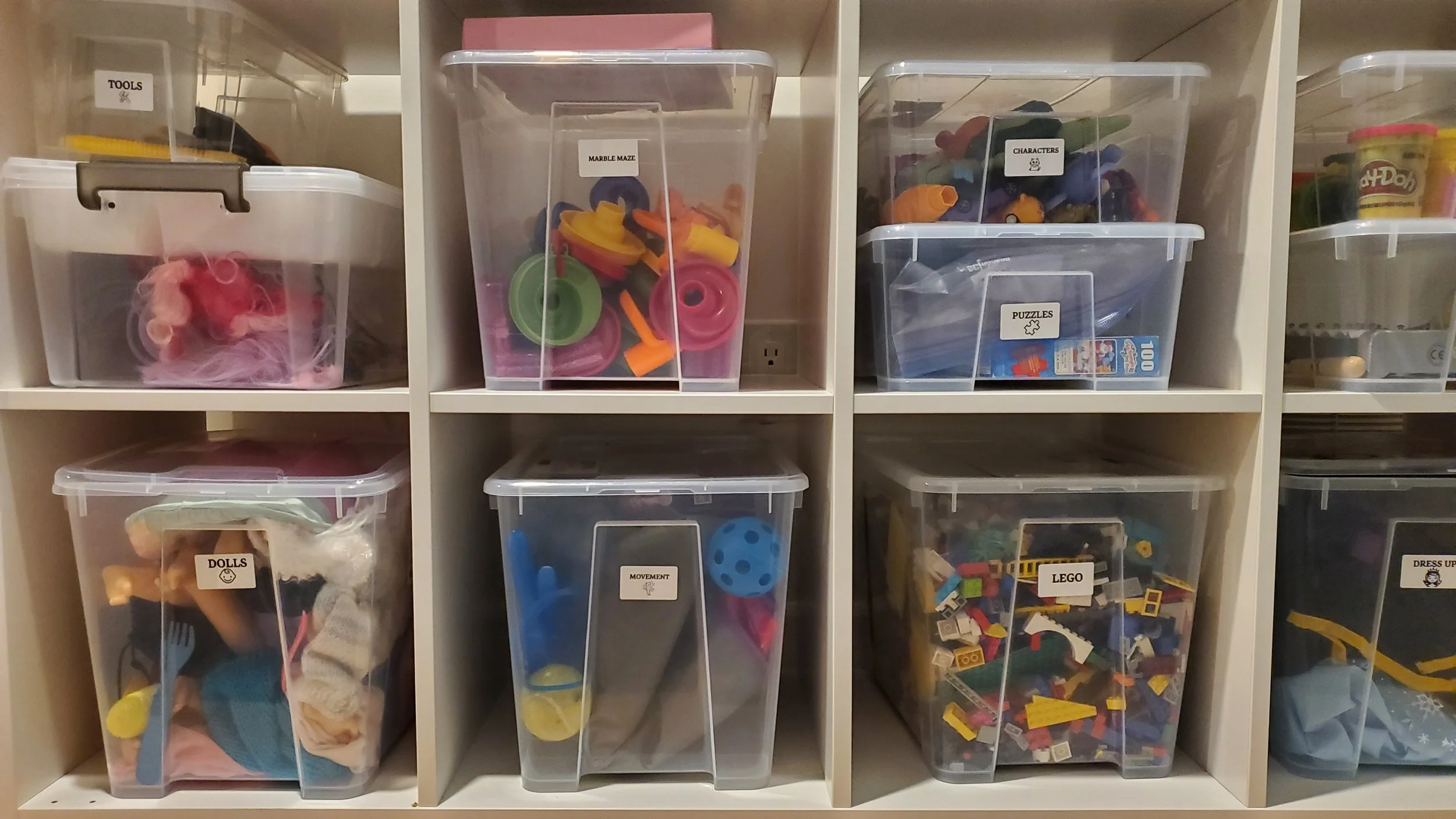
Clear bins
Open baskets
Hooks instead of drawers
Labels that are obvious, not subtle
Visibility reduces the mental energy required to remember.
You’re not messy. You need your environment to support recall.
3. Create Drop Zones Everywhere
ADHD brains struggle with transitions.
The moment you walk into the house, your brain is shifting from “outside mode” to “home mode.” That’s when items get dropped wherever your hand happens to be.
Instead of fighting this, design for it.
Install simple drop zones:
Entryway hook + bin
Kitchen counter tray
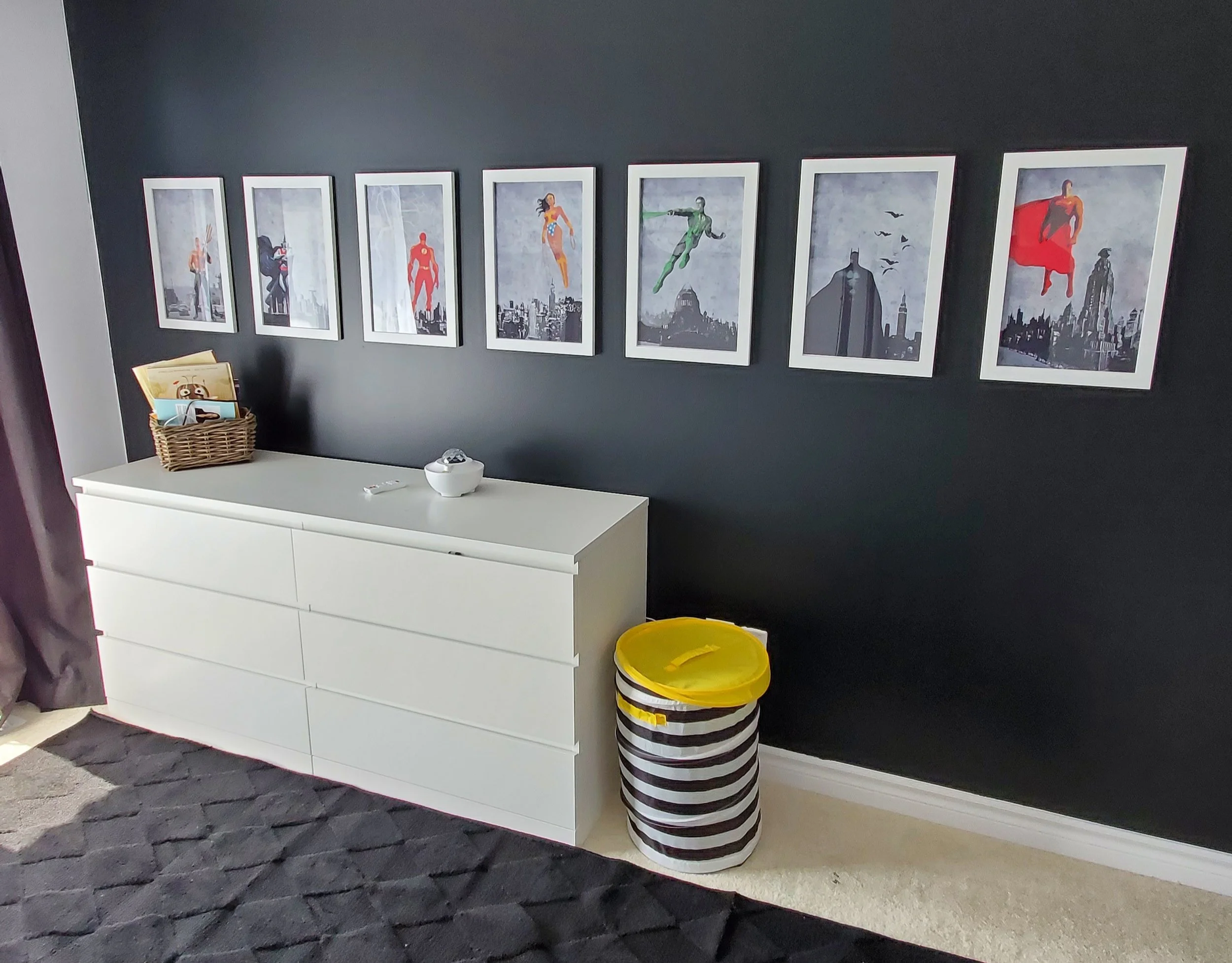
Laundry basket where clothes naturally land
A charging station near your usual sitting spot
The system should exist where the behaviour already happens.
Not where you wish it happens.
4. Externalize Your Brain
If you rely on memory alone, you’ll feel constantly behind.
Instead, move everything out of your head.
Use:
Visual checklists
A whiteboard in a high-traffic area
A weekly reset checklist
Calendar reminders
A “Next Actions” notepad
Executive functioning improves when information is external.
This reduces:
Mental clutter
Anxiety
Decision fatigue
Your brain is for ideas and creativity, not storage.
5. Lower Decision Fatigue
ADHD + parenting = constant decisions.
What’s for dinner?
Where are the shoes?
Did I sign that form?
Which chore comes first?
Decision fatigue quietly drains your regulation.
Reduce decisions by:
Creating 5 go-to dinner rotations
Using one laundry day instead of “whenever”
Assigning a home to every high-use item
Pre-setting school outfits
Less decision-making = more emotional capacity.
6. Build Reset Rituals, Not Cleaning Marathons
All-or-nothing thinking is common with ADHD.
You wait until things feel overwhelming… then attempt a massive reset.
Instead, build small reset rituals:
10-minute nightly reset
Sunday 30-minute weekly reset
“Clear one surface” rule
One laundry cycle per day
Consistency beats intensity.
7. Design for Your Nervous System
Parenting with ADHD can mean:
Sensory overwhelm
Emotional reactivity
Burnout from masking
Guilt about not “keeping up”
Your home should lower stimulation, not increase it.
Consider:
Neutral storage bins instead of bright chaos
Fewer decorative items
Closed storage in overstimulating areas
A personal quiet corner just for you
You deserve regulation too.
The Shift That Changes Everything
Instead of asking:
“Why can’t I stay organized?”
Ask:
“What kind of system would make this easier for my brain?”
Systems are not moral.
They either reduce friction or they create it.
When you build systems that match your wiring, your home starts to feel supportive instead of overwhelming.
And your children see something powerful:
An adult who designs their life intentionally. Not perfectly. Intentionally.
Need Support Setting This Up?
Visit my digital store, and you’ll find supportive guides like The 15-Minute Reset that will help you create a system so your home feels supportive, not overwhelming.