

How To Create A Home Environment That Supports Your Child With ADHD
If you’re parenting a child with ADHD, you already know something important:
It’s not a discipline problem.
It’s not a motivation problem.
It’s not a “try harder” problem.
It’s a systems problem.
Children with ADHD struggle with executive functioning — the brain’s management system. Planning, sequencing, organizing, prioritizing, transitioning, regulating impulses — these aren’t character traits. They’re neurological functions.
And when the environment doesn’t support those functions, everyone feels it.
The good news?
You can design your home to work with your child’s brain instead of against it.
Let’s talk about how.
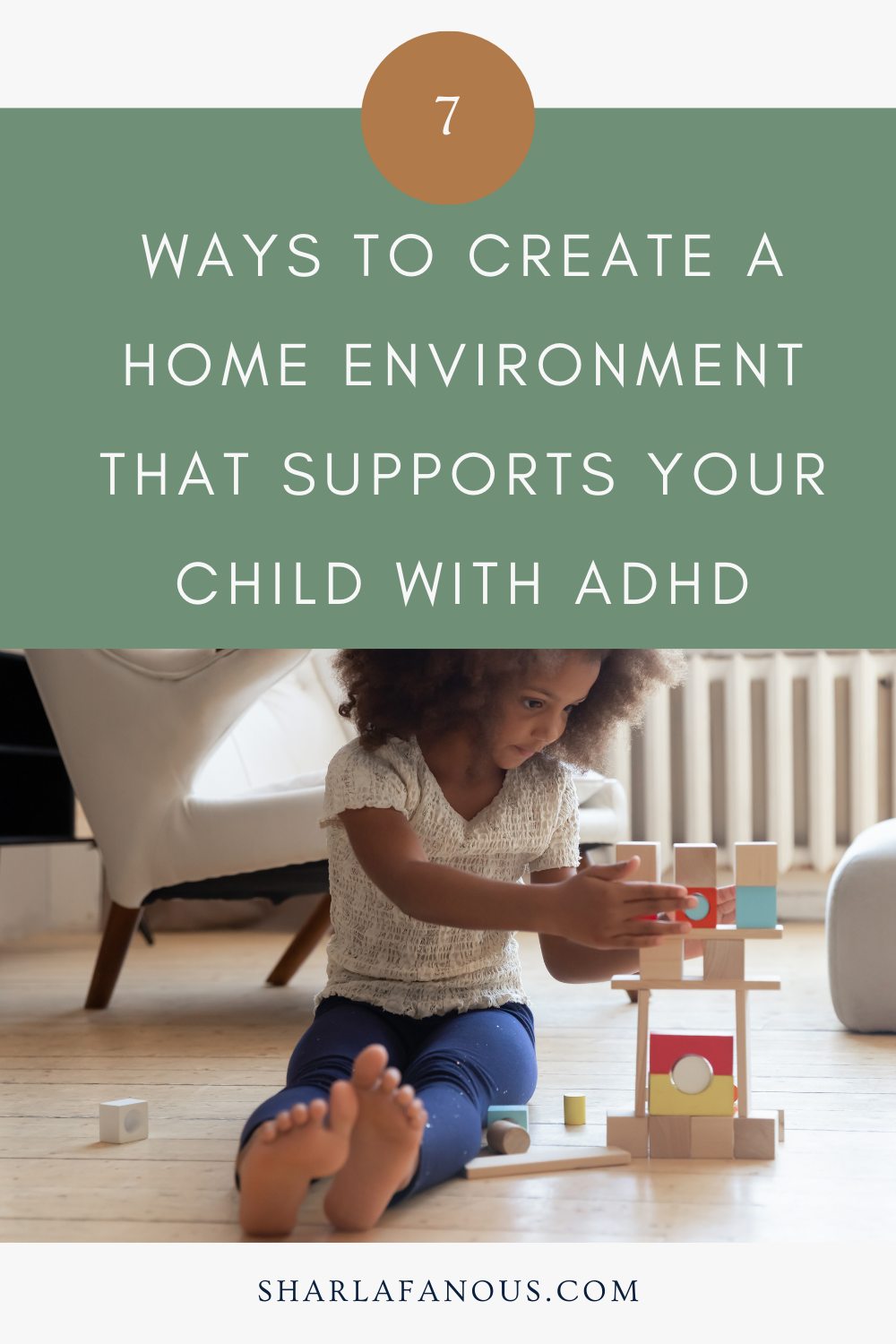
1. Reduce Visual Overwhelm
Children with ADHD are often highly sensitive to visual input. Too much clutter equals too much information. Too much information equals stress.
When every surface is covered, every bin is overflowing, and every shelf is packed, their brain has to process all of it — even if they’re trying to focus on one small task.
What helps:
Clear surfaces wherever possible
Open bins with simple categories
Labels with words and pictures
Fewer choices displayed at one time
Less visual noise = less cognitive load.
You are not “hiding their personality.”
You are protecting their focus.
2. Make Everything Visible (But Contained)
Out of sight is often out of mind for ADHD brains.
If homework lives inside three drawers, a binder, and a backpack — it may as well not exist.
The key is visible, low-friction storage.

Try:
Clear bins instead of opaque ones
Hooks instead of folded piles
Open baskets instead of lids
A homework station that stays set up
The goal is reducing steps. Every extra step is another chance for derailment.
If it takes five steps to put something away, it won’t happen consistently. If it takes one? Now we’re working with the brain.
3. Create Zones With Purpose
Children with ADHD benefit from environmental cues. When a space clearly signals what it’s for, transitions become easier.
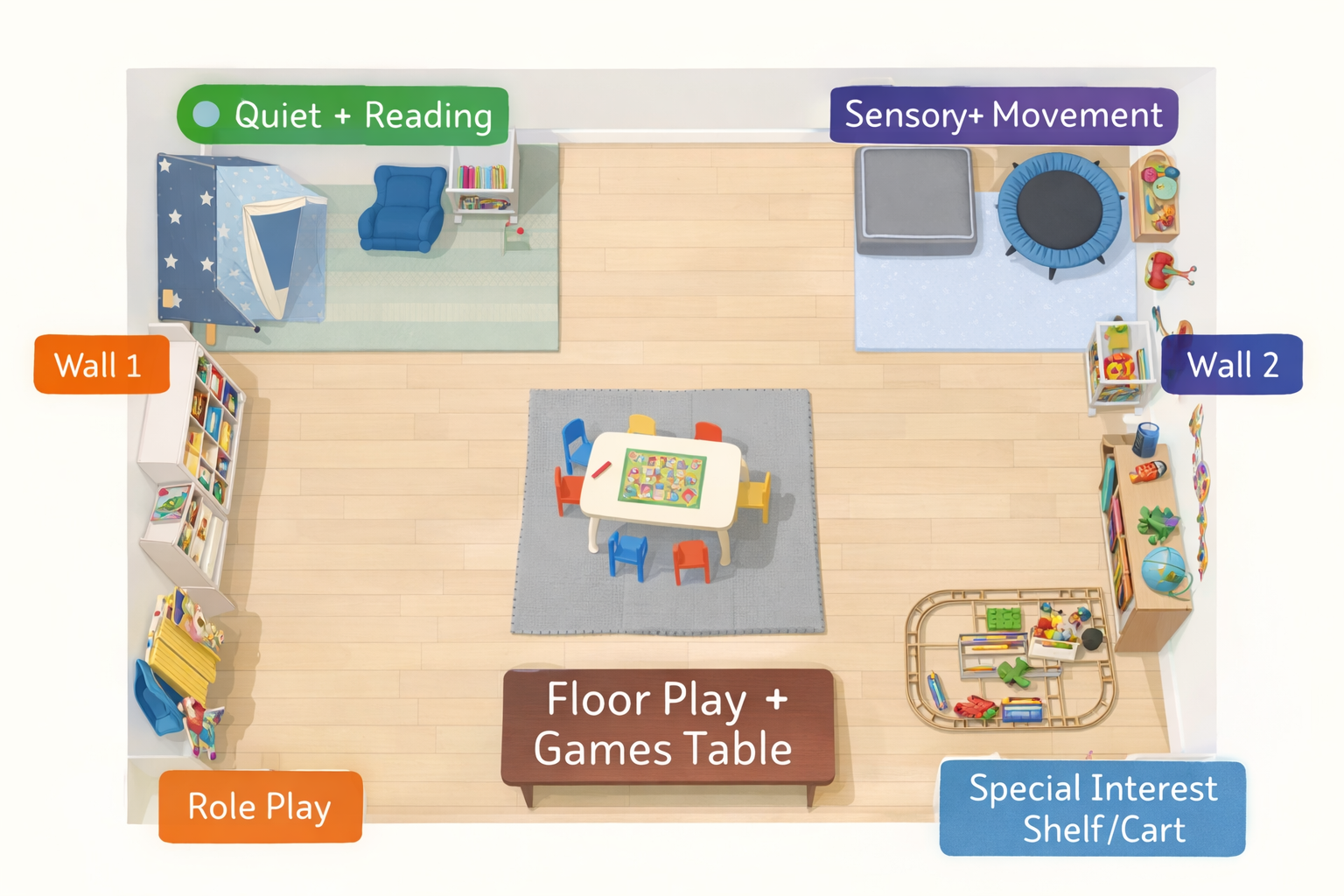
Instead of one big multi-purpose room, define micro-zones:
A homework zone
A sensory regulation corner
A creative/play zone
A quiet decompression area
You don’t need a large house.
You need intentional corners.
Even a small basket with fidgets and a floor pillow can become a regulation station.
The brain thrives on predictability.
4. Externalize Executive Functioning
If your child struggles to remember routines, follow multi-step directions, or transition smoothly — stop expecting the brain to hold the plan internally.
Put the plan outside the brain.
Examples:
Visual morning routine checklist
After-school reset list
Bedtime sequence chart
“Clean up” picture guide
This isn’t babying them.
It’s scaffolding executive functioning until their skills strengthen.
Eventually, these routines become internalized. But first, they need to live on the wall.
5. Lower Decision Fatigue
Many behavioral struggles are actually decision fatigue in disguise.
“What should I wear?”
“Where does this go?”
“What do I start with?”
“Which folder do I use?”
Too many choices = paralysis or avoidance.
Simplify:
Capsule wardrobes for school
Clearly assigned homes for items
Pre-decided snack bins
One homework starting ritual

The more decisions you remove, the more energy remains for learning and emotional regulation.
6. Build In Movement + Regulation
ADHD brains crave stimulation and movement.
If your home expects stillness 24/7, you’ll see resistance — not because your child is oppositional, but because their nervous system is under-supported.
Consider:
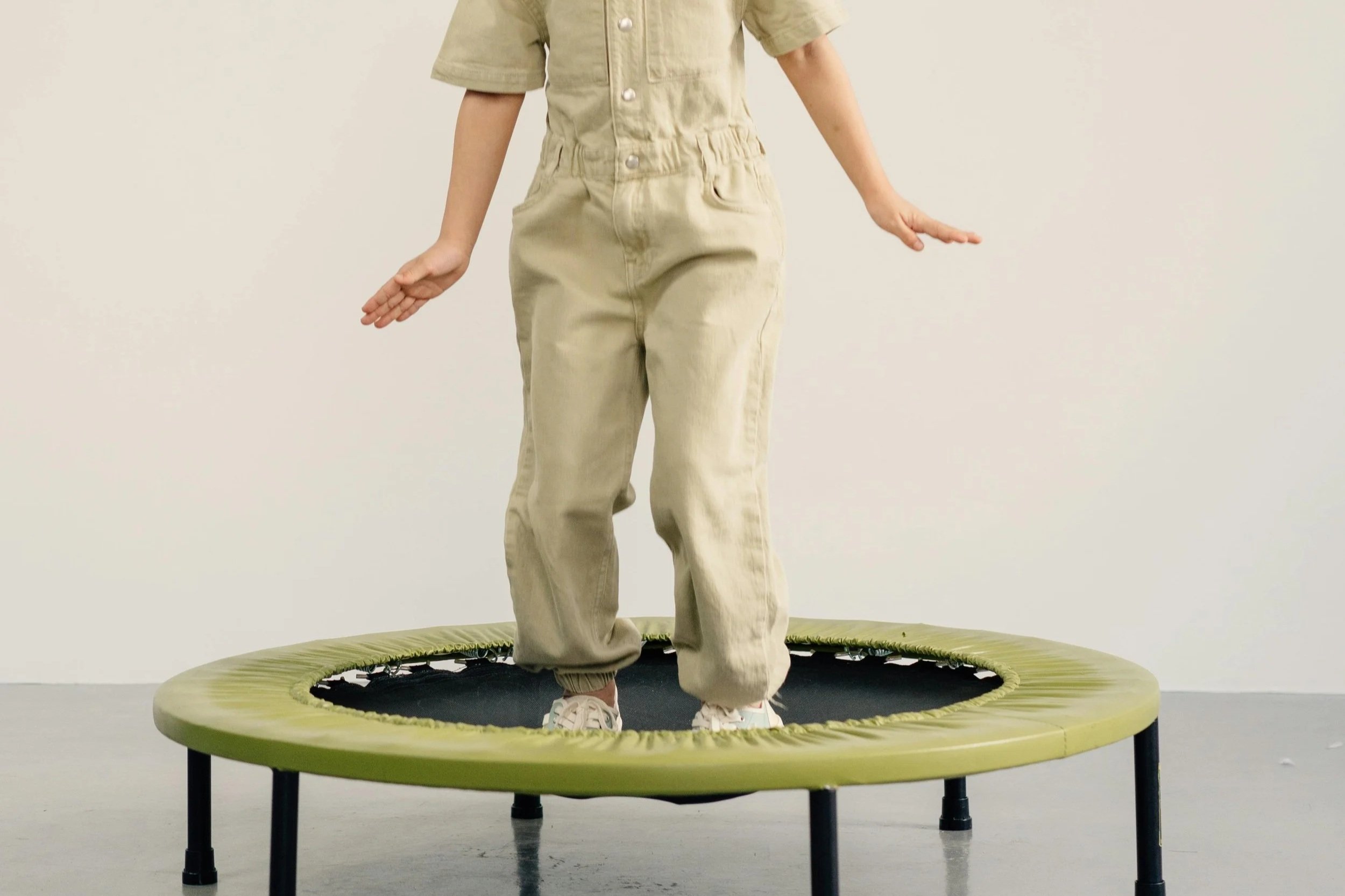
A small trampoline
A wobble stool
Floor cushions instead of only chairs
Scheduled movement breaks
Regulation is not a reward. It is a prerequisite.
7. Design for Growth, Not Perfection
The goal is not a Pinterest-perfect home.
The goal is a home that lowers friction.
Your systems should:
Adapt as your child matures
Be easy to reset
Allow imperfection
Support collaboration
Ask your child what works. Observe what consistently breaks down. Adjust.
This is a dynamic process — not a one-time organizing project.
The Shift That Changes Everything
When you move from:
“Why can’t they just…”
to
“What does their brain need from this environment?”
Everything softens.
You become strategic instead of reactive.
Your child feels supported instead of criticized.
And your home begins to work with your family — not against it.
ADHD is not a flaw to fix.
It’s a different wiring pattern that requires thoughtful environmental design. And when you get the environment right, behaviour often follows.
Ready to create a brain-aligned system for your child’s space?
If you’re feeling overwhelmed trying to figure this out alone, you don’t have to.
Download The Calm Playroom System.
Simple. Strategic. Sustainable.